
Materials engineering guide
What Are Non-Ferrous Metals? Properties, Uses, and Examples
Learn what non-ferrous metals are, how they differ from ferrous metals, and discover common examples like copper, aluminum, and titanium used in industry today.
Non-ferrous metals are central to the products and infrastructure we use every day, from electrical conductors and lightweight vehicle components to architectural façades and medical devices.
Introduction
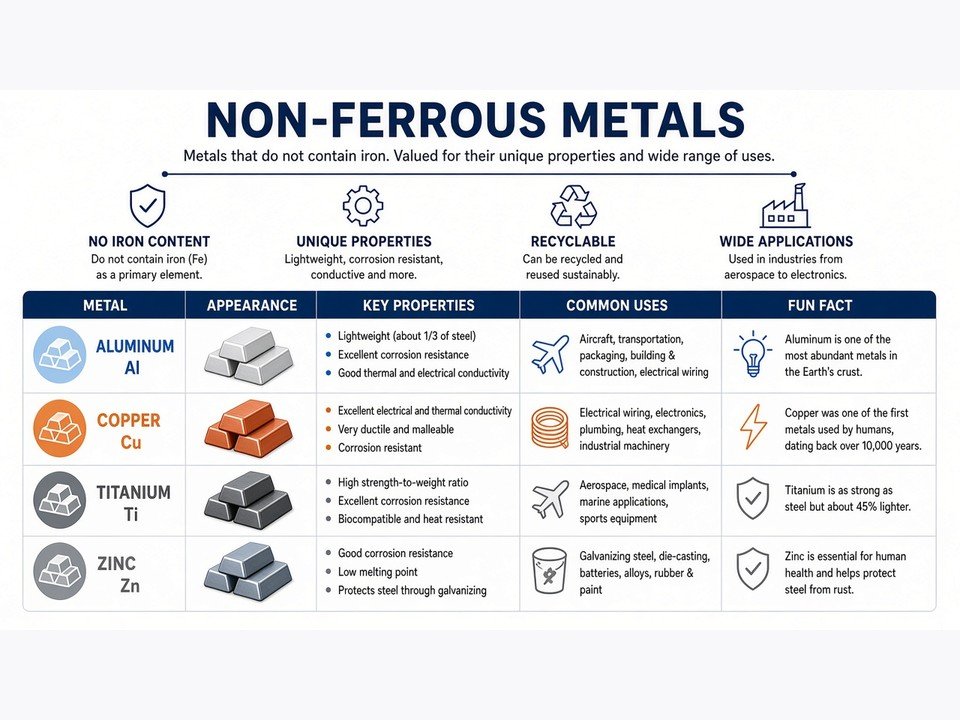
When we describe a metal as non-ferrous, we mean that it contains no iron as its principal metallic element. Aluminum, copper, titanium, zinc, gold, silver, lead, and nickel are familiar examples. Their chemistry gives them a different balance of conductivity, corrosion behavior, density, magnetic response, and workability from steels and other ferrous materials.
At PartsMake, we review material selection in the context of the complete part: its geometry, tolerances, surface requirements, production volume, and intended environment. This guide explains how to identify non-ferrous metals, how to categorize the most common examples, and why their properties matter in manufacturing, architecture, electronics, and product development.
What Are Non-Ferrous Metals?
The defining distinction is chemical: a non-ferrous metal does not have iron as its base. This category includes both commercially pure metals and alloys whose primary element is something other than iron. Brass, for example, is a non-ferrous copper-zinc alloy, while bronze is primarily copper and tin.
Manufacturers select non-ferrous metals because they can provide useful combinations of low density, electrical or thermal conductivity, corrosion resistance, non-magnetic behavior, and attractive surface appearance. No single material provides all of these properties equally, so the correct choice depends on what the component must do.
Conductivity where it matters
Copper and aluminum are widely used when electrical or thermal energy must move efficiently. This makes them important in electronics, power distribution, heat management, and industrial equipment.
Corrosion and magnetic response
Many non-ferrous metals resist the red-brown rust associated with iron. They are also generally non-magnetic, although individual metals and alloys can behave differently and should be verified for a sensitive application.
Material selection affects machining behavior, finishing, inspection, and final part performance—not just the raw material line item.
Ferrous vs. Non-Ferrous Metals: Key Differences
The ferrous or non-ferrous classification matters because it provides an early indication of how a material may respond in service and during manufacturing. It is a starting point, not a substitute for reviewing the exact alloy, temper, heat treatment, finish, and operating environment.
| Consideration | Ferrous metals | Non-ferrous metals |
|---|---|---|
| Base chemistry | Iron is the principal metallic element. | Iron is absent as the principal metallic element. |
| Magnetic response | Many common steels and iron-based materials are magnetic. | Generally non-magnetic, with important alloy-specific exceptions. |
| Corrosion behavior | Iron-containing materials can rust when exposed to moisture and oxygen. | Often resist rust, though oxidation, tarnishing, pitting, or other corrosion can still occur. |
| Weight and cost | Often economical and strong, but commonly heavier than lightweight alternatives. | May provide a favorable weight-to-strength or conductivity ratio, but many grades cost more. |
Magnetic properties
Iron has a magnetic structure that makes many iron-based alloys responsive to magnets. This can be useful for separation, sensing, motors, and fixtures. Non-ferrous metals are generally selected when magnetic interference, magnetic attraction, or electrical eddy-current behavior must be limited. However, “non-ferrous” does not mean every example is completely non-magnetic; nickel and some specialized alloys demonstrate why the exact grade matters.
Resistance properties
Rust is a specific form of corrosion associated with iron and iron oxides. Non-ferrous metals do not rust in that same way, but they can still oxidize or corrode. Aluminum forms a protective oxide layer, copper can develop a patina, and zinc can be consumed gradually while protecting steel in a galvanizing system. The correct finish and material pairing are important in humid, salty, chemical, or high-temperature environments.
Weight and cost
Aluminum and titanium can reduce mass in applications where weight affects handling, movement, or energy use. Copper can justify its cost through conductivity, while precious metals are used where reliability, chemical stability, or contact performance is more important than raw material price. We recommend comparing total part performance, manufacturability, finishing, and service life rather than choosing by material cost alone.
Engineering note
A material label is only the beginning. When we review a drawing, we also look at the specified alloy, hardness or temper, critical dimensions, surface requirements, joining method, and inspection criteria.
Common Examples of Non-Ferrous Metals
The following materials appear across transportation, electronics, construction, energy, medical equipment, consumer products, and precision manufacturing. Their applications reflect distinct combinations of physical, chemical, and manufacturing properties.
Aluminum
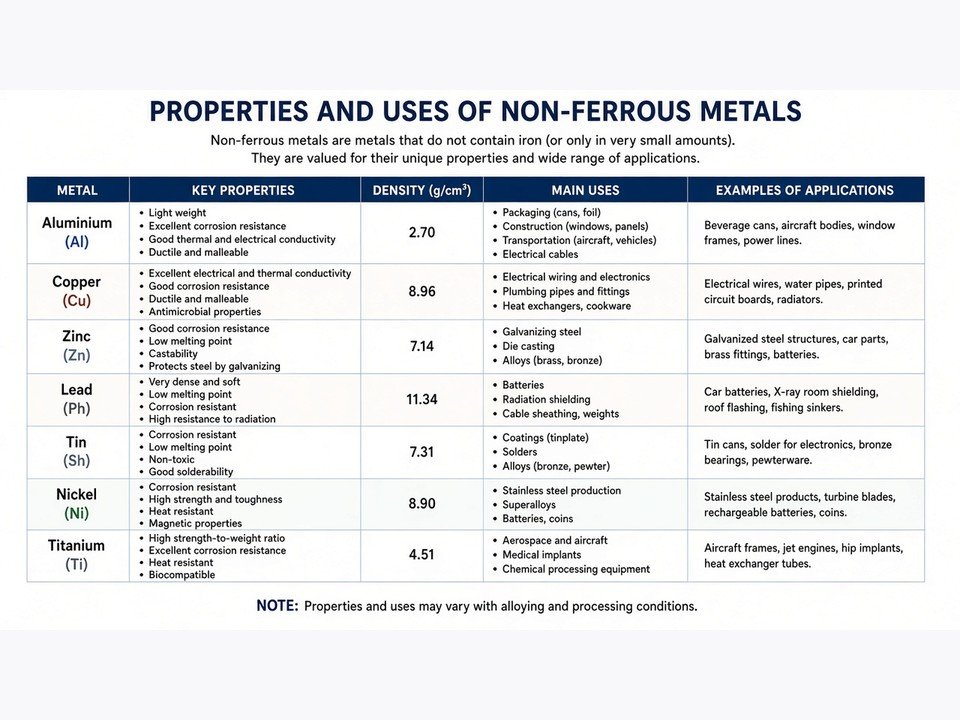
Aluminum is lightweight, durable, and highly recyclable. Its relatively low density makes it useful for housings, brackets, structural parts, heat-management components, and transportation products. Aluminum alloys can also be machined, formed, and finished in ways that support both prototypes and production parts.
Copper
Copper is valued for exceptional electrical and thermal conductivity. We commonly see it considered for electrical contacts, busbars, heat-transfer components, wiring-related parts, and electronics hardware. Its softness and tendency to generate burrs or deformation during machining make tooling, fixturing, cutting conditions, and inspection important.
Titanium
Titanium offers a high strength-to-weight ratio and is used in aerospace, medical, chemical, and demanding industrial applications. It can be more difficult to machine than many aluminum grades because heat management, tool engagement, and process control are critical. A manufacturing review helps identify risks before production begins.
Zinc
Zinc is widely used for galvanizing, where it protects steel from corrosion. It is also used in die-cast components and other applications where casting behavior, dimensional requirements, and corrosion protection must be balanced.
Precious metals: gold and silver
Gold and silver combine electrical conductivity with valuable resistance to tarnishing or chemical change in selected environments. They are used in jewelry, electrical contacts, connectors, coatings, and specialized electronics. Their high material value makes recovery, controlled handling, and application-specific selection especially important.
Lead and nickel
Lead is known for high density and is used in selected battery, shielding, and industrial applications, subject to applicable safety and handling requirements. Nickel is used in plating, corrosion-resistant alloys, batteries, and high-temperature applications. Nickel also demonstrates why a broad category should not replace a detailed review of magnetic and environmental requirements.
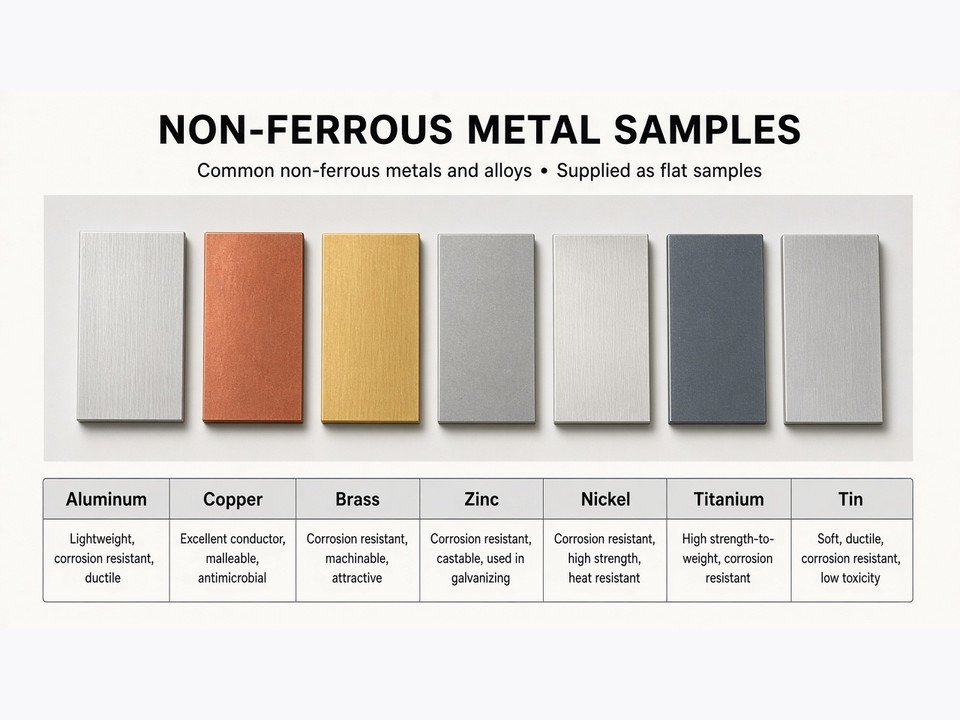
Aluminum and copper are common choices when low mass, conductivity, or thermal performance is central to the design.
Alloys: The Science Behind Non-Ferrous Performance
Pure metals can provide excellent performance in one area, but alloying allows engineers to tune a broader set of properties. Alloying means combining a base metal with one or more additional elements. The resulting material may offer improved strength, hardness, machinability, corrosion resistance, wear behavior, color, or acoustic response.
The alloy designation, temper, heat treatment, and manufacturing process all matter. Two materials with the same base metal can behave differently during CNC machining, forming, finishing, or service. For a custom component, we use the drawing and application requirements to determine what information needs to be confirmed before production.
Brass
Brass is primarily a copper-zinc alloy. It is valued for corrosion resistance, machinability, appearance, and useful acoustic properties, which support applications such as fittings, hardware, instruments, and decorative components.
Bronze
Bronze is primarily a copper-tin alloy. It is known for durability and strength and can be selected for wear-related components, bushings, marine hardware, and other parts where its material behavior suits the environment.
A practical material-selection sequence
-
1
Define the service environment
Identify moisture, chemicals, temperature, wear, electrical load, and magnetic constraints.
-
2
Select the property balance
Compare strength, density, conductivity, corrosion behavior, finish, and expected service life.
-
3
Check manufacturability
Confirm that the alloy and geometry suit CNC machining, turning, sheet fabrication, molding, finishing, or another required process.
-
4
Set inspection requirements
Identify critical dimensions, material verification, surface requirements, and acceptance criteria before production.
The Importance of Recycling Non-Ferrous Metals
Non-ferrous metals can be recycled repeatedly without losing their basic chemical identity. This makes recovery especially valuable for materials such as aluminum, copper, brass, and other alloys. The recycled metal must still be sorted, processed, and controlled appropriately, but it remains a valuable resource rather than becoming waste after one product lifecycle.
Recycling aluminum and copper can require substantially less energy than producing equivalent metal from virgin ore. Lower energy demand can reduce the environmental burden associated with extraction and primary processing. Recycling also supports material availability and helps recover value from manufacturing scrap, end-of-life products, and rejected components.
Design consideration
When designing a part, consider whether mixed materials, coatings, inserts, or joined assemblies will complicate separation at end of life. Material clarity can support both manufacturing control and future recovery.
Frequently Asked Questions
What are 5 examples of non-ferrous metals?
Five common examples are aluminum, copper, titanium, zinc, and nickel. Gold, silver, lead, brass, and bronze are also non-ferrous metals or non-ferrous alloys.
What are 5 examples of ferrous metals?
Common ferrous examples include iron, carbon steel, stainless steel, cast iron, and tool steel. These materials are iron-based, although alloying elements can significantly change their corrosion resistance, hardness, strength, and magnetic response.
What metal will never rust?
Rust specifically requires iron, so metals such as aluminum, copper, gold, and titanium do not rust in the iron-oxide sense. They can still oxidize, tarnish, pit, or corrode under certain conditions. “Rust-free” should therefore not be treated as “immune to every form of corrosion.”
What are the main differences between ferrous and non-ferrous metals?
Ferrous metals are iron-based and are often magnetic, strong, and economical, but they can rust when unprotected. Non-ferrous metals contain no iron as their principal element and are generally non-magnetic, often more resistant to rust, and frequently lighter or more conductive. The exact properties depend on the specific grade and alloy.
Conclusion
Non-ferrous metals give engineers a broad toolkit for modern manufacturing. Aluminum can reduce mass, copper can carry electrical and thermal energy, titanium can combine strength with low weight, zinc can protect steel, and precious metals can support high-value electrical and decorative applications. Brass and bronze show how alloying can further tune the performance of a copper-based material.
The best selection is not always the least expensive material. We recommend evaluating the complete requirement: service environment, load, conductivity, weight, corrosion behavior, finish, machining method, tolerances, production quantity, and inspection needs.
At PartsMake, we support custom metal components from prototype through repeat production. Our team reviews CAD files, drawings, materials, tolerances, critical dimensions, surface requirements, and intended applications before production begins. Whether your project needs CNC machining, 5-axis machining, CNC turning, sheet metal fabrication, precision grinding, EDM, surface finishing, or inspection, we can help identify manufacturing risks early and plan the right process.
Contact PartsMake for a technical consultationDiscuss your component
Need help selecting or manufacturing a non-ferrous metal part?
Share your drawings, CAD files, material requirements, tolerances, quantity, and application details with our engineering team. We will review the project and help determine a practical path from prototype to production.